

A Refined Explanation Of The Sansui Crees
The Foundational Proofs of Imam al-Sanusi is one of the foundational works in Islamic theology and is considered historically as an elemental text in traditional Islamic education. Studied for centuries and memorized by children throughout the Islamic world, The Foundational Proofs offers readers a methodical outline of Islamic doctrine that satisfies the mind and the heart alike. In this age of mass confusion and intellectual malaise, where fundamental Islamic beliefs are misunderstood and credulity is championed as faith, The Foundational Proofs explains the tenets of faith and supports them both rationally and textually.
Further enhancing the value of this work is the engaging and relevant additions of Shaykh Sa'id Foudah, one of the worlds leading Islamic theologians today, who presents Imam al-Sanusi's work with the interlinear commentary of Imam Ahmad b. Isa al-Ansari and engaging and detailed footnotes collated from a variety of famous commentaries, such as those by Imam al-Bajuri, Imam al-Battawi, Imam al-Sawi, Imam al-Marghani, and others, as well as his own insightful comments.

Depression & Anxiety
SKU:
111111
In a world plagued by depression and anxiety, “Depression and Anxiety: The Causes and Treatment According to the Qurän” explores these ailments from a unique perspective. Based on the teachings of Imam Muhammad Sa’eed Ramadän al-Büti, this groundbreaking book unveils hidden causes often overlooked within a secular paradigm.
Delving into different types of depression and anxiety linked to specific causes, it emphasizes the role of a strengthened relationship with Allah in finding healing and empowerment. This book offers spiritual enrichment, guiding readers to lessen their attachment to this world, purify their hearts and souls, and understand the purpose of their existence.
By drawing nearer to Allah and embracing the teachings of the Quran, readers gain the competence and strength to face life's challenges without succumbing to anxiety or depression. With insightful appendices and additional resources, “Depression and Anxiety: The Causes and Treatment According to the Quran” provides the tools for a deeper understanding, guiding individuals towards the emotional well-being and inner peace that comes from being close to one's Lord.
And with Allah alone is every success.
( From the publisher)
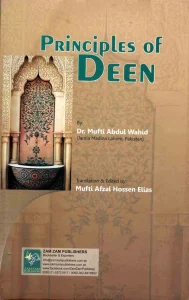
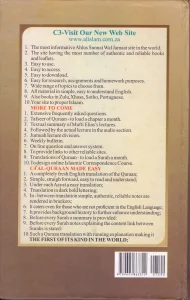
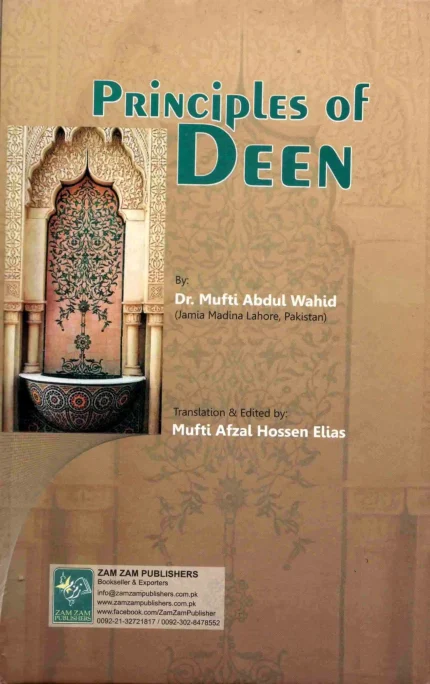
Principles Of Deen
The book "Principles of Deen" has 12 chapters, explaining:
1.) Wahi
2.) Principles of Tafseer
3.) Principles of Hadith
4.) The consensus of the Ummat (Ijma)
5.) Qiyas
6.) What is Fiqh
7.) Principles of Fiqh
8.) Essentials of Fiqh
9.) Principles of ijtihad
10.) Principles of Taqleed
11.) Principles of Sunnat and Bid'at and
12.) Principles of Imaan and Kufr.
Information in this book, because of its close link to classically written text will be new to many readers. Thus I suggest one reads, studies and seeks further explanation from Ulema. In fact, it is an ideal textbook for advanced adult classes in any part of the world.
The contents, if understood, will definitely create a better rapport, link, and bridge between the lay Muslims and the Ulema e Haqq. Dr. Mufti Abdul Wahid, Mufti of Jamia Madina Lahore, Pakistan, has written many other works which are compiled in syllabus form. These are taught in numerous Masaajids in Pakistan.
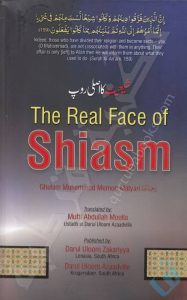
The Real Face Of Shiasim
"The Real Face of Shiaism" by Darul Uloom Azaadville offers a critical examination of Shi’a beliefs and practices from a Sunni perspective. The book aims to highlight theological differences between Sunni Islam and Shiism, presenting arguments based on Quranic verses, Hadith, and scholarly interpretations. Written in a straightforward and accessible style, it seeks to educate readers about the key distinctions and clarify misconceptions within the Muslim community.