

Al-Shaafi Risalah
Written in the second Islamic century by al-Imam al-Shafi’i (d. 204AH/820AD), the founder of one of the four Sunni schools of law. This important work gives the fundamental principles of Islamic jurisprudence and its influence continues to the present day. During the early years of the spread of Islam, the exponents of Islamic legal doctrine were faced with the problems raised by ruling and administering a diverse and rapidly growing empire. In Medina and Kufa, as well as other cities of early Muslim rule, schools of law had to be developed, but it took the genius of Muhammad b. Idris al-Shafi’i, born in the year 150AH/767AD, to establish the principles by which the various legal doctrines could be synthesised into a coherent system. In the Risala, which laid down the basis for such a synthesis, al-Shafi’i established the overriding authority, next only to the Qur’an, of the Sunna or example of the Prophet Muhammad as transmitted in the traditions.
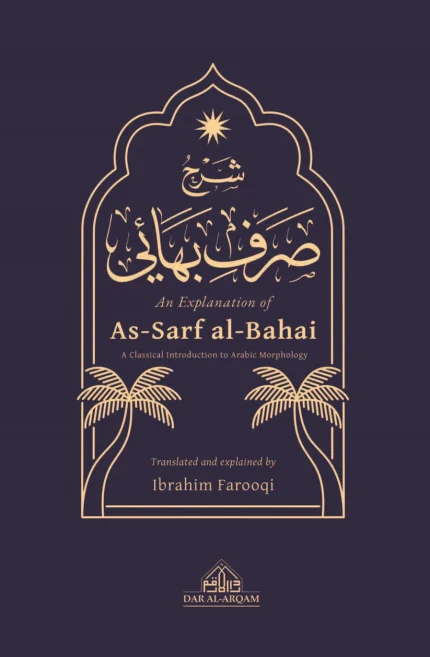
An Explanation of As-Sarf al-Bahai is a beginner-friendly guide to Arabic morphology (Sarf), focusing on the classical text Sarf e Bahai, widely studied in the Indian Subcontinent. Originally written in Persian by Bahauddin al-Amili, this work has been translated and explained in English by Ibrahim Farooqi to make it accessible to modern students.
An Explanation of As-Sarf al-Bahai is a beginner-friendly guide to Arabic morphology (Sarf), focusing on the classical text Sarf e Bahai, widely studied in the Indian Subcontinent. Originally written in Persian by Bahauddin al-Amili, this work has been translated and explained in English by Ibrahim Farooqi to make it accessible to modern students.
An Explanation Of The Bayquni Poem
Description From The Publisher
I begin with praise, sending prayers upon
Muhammad S.A.W, the best of Prophets sent
From the most noble of sciences is the science of Hadith. It is the key to unlock the Sunna of the Prophet S.A.W through his words, actions, qualities and tacit approvals. Allah says: “Follow him so that you may be guided.” The Messenger of Allah S.A.W said: “May Allah illuminate the one who hears my speech, understands it and conveys it.”
For this reason, the scholars of Hadith have spared no effort to establish the principles by which to verify narrations and deduce—with the utmost precision—what can and cannot be attributed to the guide of mankind S.A.W. Facilitating this quest for the beginning student, the erudite Imam ʿUmar al-Bayquni al-Dimashqi (d. 1080 H.) succinctly defined thirty-four categories of Hadith in his famous thirty-four verses of poetry.
Completed, with goodness they are sealed!
Numerous commentaries upon this treatise followed, of which one of the most sought after in recent times is the masterpiece we have before us, written by the master [hafiz] of Hadith and exegete of the Qurʾan, Imam ʿAbdallah Sirajuddin al-Husayni. In his unique and eloquent style, the saintly Imam takes the reader on an illuminating path of learning, guiding him towards the guidance of the most beloved S.A.W.
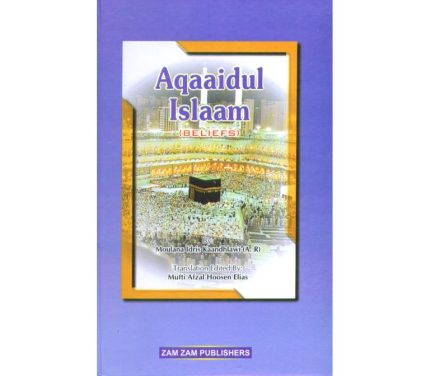
Aqaaidul Islam
In this age of trials and tribulations, every so often, one hears and reads about a new unheard of fabricated belief floating around or denial of a standard belief of the Ahl Sunnah wal Jama'ah.
Thus, in this book, the original beliefs of the Ahl Sunnah wal Jama'ah have been listed and explained. It is essential for every Muslim to have valid, reliable, and authentic beliefs in conformity to the Ahl Sunnah wal Jama'ah.

Ayyuhal Walad (O Son!)
"Ayyuhal Walad" (O Son!) is a timeless epistle by Imam Abu Hamid al-Ghazali, addressed to one of his advanced students. The student, seeking guidance on the most beneficial knowledge for the hereafter, requested a concise and practical response. In his letter, Imam al-Ghazali distills profound spiritual wisdom into a brief yet comprehensive guide, emphasizing the importance of integrating knowledge with righteous action.
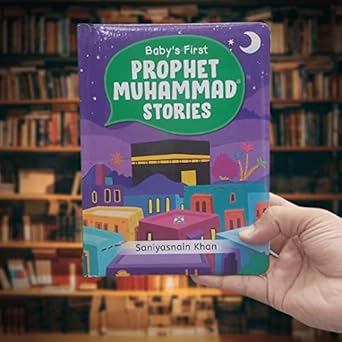
Baby’s First Prophet Muhammad Stories
"Baby's First Prophet Muhammad Stories" is a beautifully illustrated board book designed to introduce young children to the life and teachings of Prophet Muhammad (peace be upon him). Authored by Saniyasnain Khan, a renowned writer of Islamic children's literature, this book presents 20 easy-to-read stories, each accompanied by vibrant illustrations and a moral lesson or prayer. The stories are crafted to be engaging and accessible, making them perfect for reading aloud to toddlers and young children, fostering an early appreciation for the Prophet's life and the values he embodied.
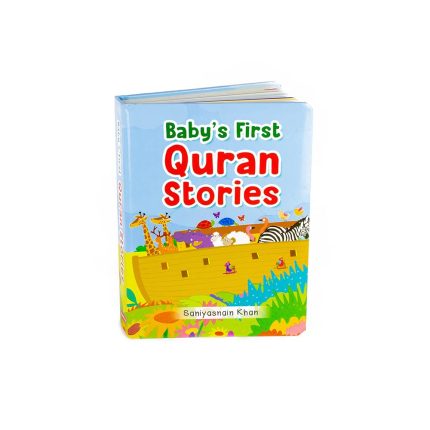
Baby’s First Quran Stories
"Baby's First Quran Stories" is a beautifully illustrated board book designed to introduce young children to some of the Quran's most cherished stories. Authored by Saniyasnain Khan, a renowned writer of Islamic children's literature, this book presents 20 easy-to-read stories, each accompanied by vibrant illustrations and a moral lesson. The stories are crafted to be engaging and accessible, making them perfect for reading aloud to toddlers and young children, fostering an early appreciation for the teachings of the Quran.
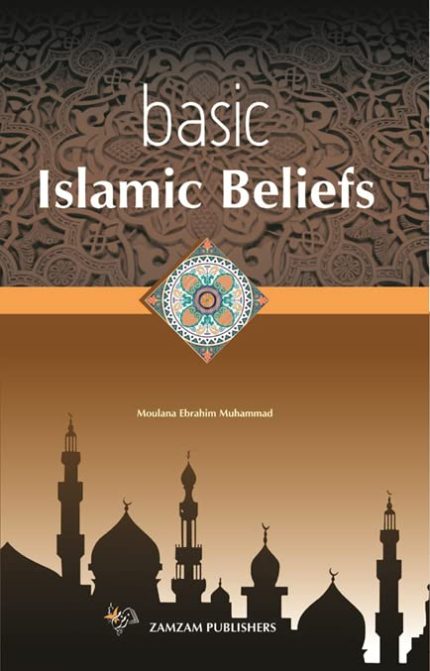
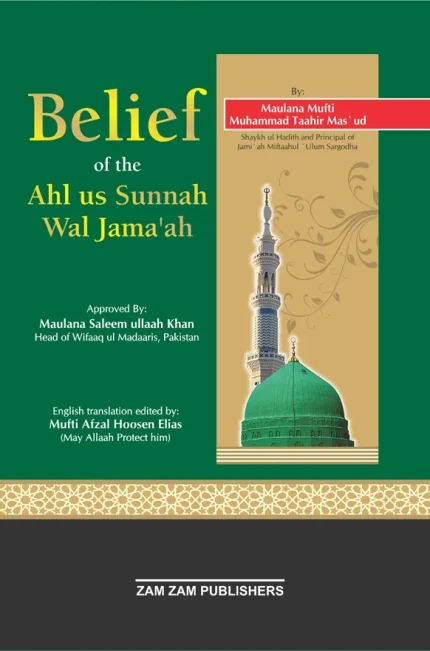
Beleif Of The Ahlus Sunnah Wal Jamah
The fortune of man in this world lies in following the commands of Allah. Some of the commands of Allah are related to beliefs and some are related to action. The Importance of beliefs is more important than action. This is because eternal salvation is based on beliefs. Without beliefs, actions have no soul. If there are shortcomings in action, then it is hoped that it will be overlooked through the grace of Allah. However, one will not be forgiven if he fails in the scrutiny of his beliefs. In every era, the ahl us sunnah wal Jama’ah have correctly interpreted, adopted and followed the Islamic belief.
It was my desire that the belief of the Ahl us Sunnah wal Jamah should be compiled in such a way that it will be beneficial to people of every thought.
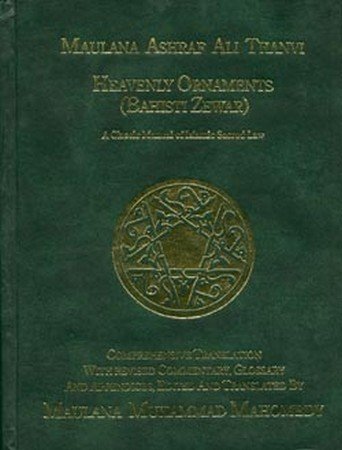
Beshti Zewar (Heavenly Ornaments)
Heavenly Ornaments (Bahishti Zewar) is a comprehensive manual of Islamic sacred law (Hanafi Fiqh), originally written in Urdu with Muslim women in mind. It serves as a guide encompassing religious and temporal information, covering various aspects of Islamic practices and daily life. While initially aimed at women, the book also provides valuable insights for men and scholars.
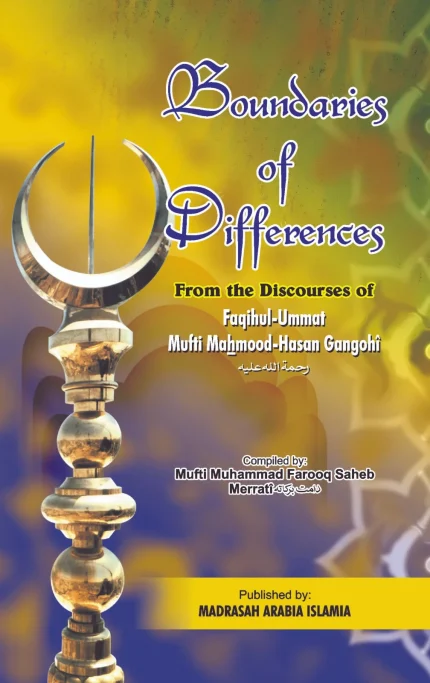
Boundaries Of Differences
Allah had blessed this ummah with this illustrious Scholar of Islam, who was born on the 9th of Jumadal Ukhra 1325 AH, In Gangoh, district Saharanpur, India.
He led a very simple, ascetic and diciplined life, far from the luxuries of the rich and famous. He was the epitome of the Sunnah in our era.
After Completion of his studies under the tutorship of great luminaries such as hadrat Maulana Husain Ahmed Madani Rehmatullahi alaih,
he was appointed as assistant Mufti and later promoted to deputy Mufti of Madrasah Mazahirul Ulum in Saharanpur until 1370 A.H. In 1384 AH,
Hadrat Mufti Mahmud Hasan Gangohi rahmatullahi alaih left the transitory abode on the 19th of Rabiul Akhir 1417 AH (2 Sep 1996).
When you read this book so you will become more concise to follow Deen e Islam.
Boundaries of Differences
Boundaries of Differences is a thought-provoking book that delves into the concept of unity amidst diversity in Islam. Authored by Mufti Muhammad Farooq Sahab, the book sheds light on embracing differences within the Muslim community, emphasizing the importance of mutual respect and understanding. It explores how acknowledging and respecting diverse opinions and practices can strengthen the bonds of brotherhood and foster a harmonious society.