
Ayyuhal Walad (O Son!)
"Ayyuhal Walad" (O Son!) is a timeless epistle by Imam Abu Hamid al-Ghazali, addressed to one of his advanced students. The student, seeking guidance on the most beneficial knowledge for the hereafter, requested a concise and practical response. In his letter, Imam al-Ghazali distills profound spiritual wisdom into a brief yet comprehensive guide, emphasizing the importance of integrating knowledge with righteous action.
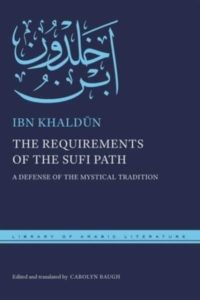
Ibn Khaldun on Sufism: Remedy for the Questioner in Search of Answers
"Ibn Khaldun on Sufism: Remedy for the Questioner in Search of Answers" is the first-ever English translation of Ibn Khaldun's treatise Shifa’ al-Sa’il li-Tahdhib al-Masa’il. In this work, Ibn Khaldun addresses a prevalent debate in fourteenth-century Andalusia regarding the necessity of a spiritual guide (shaykh) for the Sufi path. He examines whether reliance on written texts suffices for spiritual guidance or if direct mentorship is essential
The treatise delves into the nature of Sufism, its practices, and its role within Islamic spirituality. Ibn Khaldun, renowned for his contributions to sociology and historiography, applies his analytical acumen to assess the legitimacy and requirements of the Sufi tradition. His insights offer a nuanced understanding of Sufism's place in Islamic thought and practice
This translation by Yumna Ozer provides readers with access to Ibn Khaldun's perspectives on Sufism, shedding light on his views and the intellectual milieu of his time.

The Secret of Secrets
Translated into English by Shaykh Tosun Bayrak al-Jerrahi, The Secret of Secrets serves as a guide for those seeking deeper spiritual understanding. It elucidates how fundamental Islamic practices—such as prayer, fasting, almsgiving, and pilgrimage—are not merely external obligations but are imbued with inner significance that, when comprehended, lead to spiritual fulfillment and closeness to the Divine
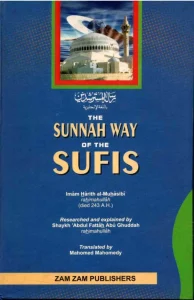
The Sunnah Way of the Sufis
The Sunnah Way of the Sufis is a translation of Imam al-Muhasibi's seminal work, Risalah al-Mustarshidin. This treatise offers profound insights into the spiritual journey of a believer, emphasizing the importance of adhering strictly to the Sunnah (traditions) of the Prophet Muhammad (peace be upon him).
Shaykh Abd al-Fattah Abu Ghuddah's meticulous research and commentary enrich the text, providing context and clarity to Imam al-Muhasibi's teachings. The book delves into various aspects of Islamic spirituality, including self-purification, sincerity in worship, and the ethical conduct expected of a Muslim.
Through narratives, anecdotes, and guidance from the pious predecessors, this work serves as a manual for those seeking to align their lives with the prophetic model, embodying the true essence of Sufism rooted in the Qur'an and Sunnah.
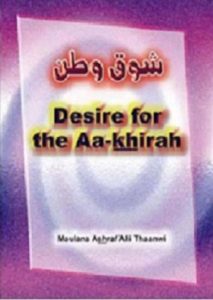
Yearning for the Hereafter
"Yearning for the Hereafter" is a profound work by Maulana Ashraf Ali Thanwi (rahimahullah) that delves into the Islamic perspective on the afterlife. The book addresses topics such as the Day of Judgment, the experiences of the soul after death, and the eternal abode of Paradise or Hell. Through this work, the author aims to instill a deep sense of longing and preparation for the Hereafter, encouraging readers to lead a life that aligns with Islamic teachings and to remain mindful of their actions in this world.