
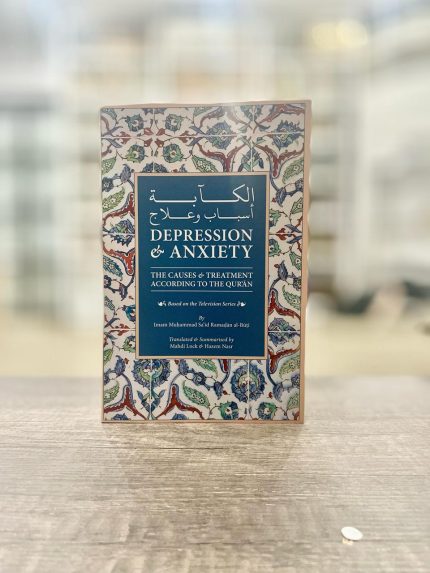
Depression & Anxiety
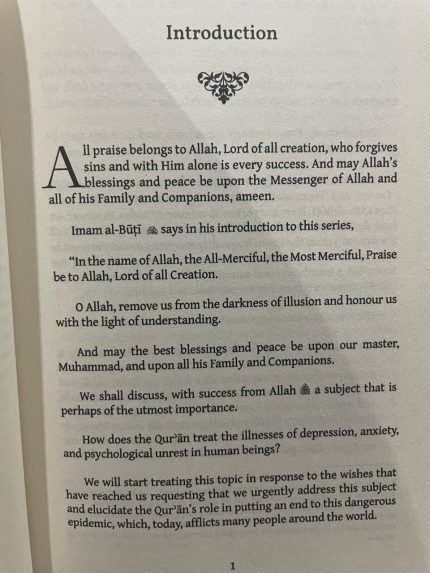
In a world plagued by depression and anxiety, “Depression and Anxiety: The Causes and Treatment According to the Qurän” explores these ailments from a unique perspective. Based on the teachings of Imam Muhammad Sa’eed Ramadän al-Büti, this groundbreaking book unveils hidden causes often overlooked within a secular paradigm.
Delving into different types of depression and anxiety linked to specific causes, it emphasizes the role of a strengthened relationship with Allah in finding healing and empowerment. This book offers spiritual enrichment, guiding readers to lessen their attachment to this world, purify their hearts and souls, and understand the purpose of their existence.
By drawing nearer to Allah and embracing the teachings of the Quran, readers gain the competence and strength to face life’s challenges without succumbing to anxiety or depression. With insightful appendices and additional resources, “Depression and Anxiety: The Causes and Treatment According to the Quran” provides the tools for a deeper understanding, guiding individuals towards the emotional well-being and inner peace that comes from being close to one’s Lord.
And with Allah alone is every success.
( From the publisher)
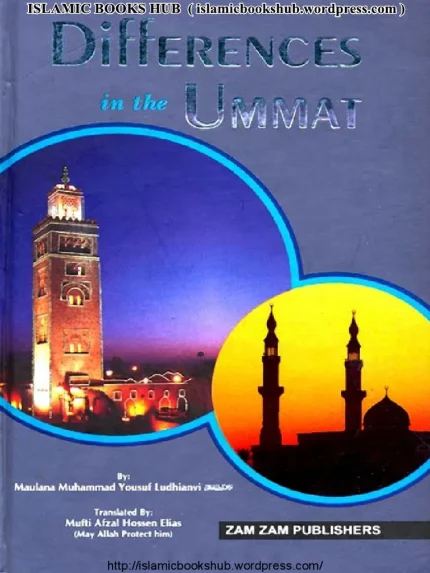
Differences In The Ummah
R80.00Differences in the Ummah and the Straight Path by Maulana Muhammad Yusuf Ludhianvi (رحمه الله) is a comprehensive examination of various theological and jurisprudential differences within the Muslim community. The book critically analyzes divisions such as Shia-Sunni, Hanafi-Wahhabi, and Deobandi-Barelvi-Maudoodi, addressing common questions like “Why do these differences exist?” and “Who should we follow?” It distinguishes between acceptable scholarly disagreements (Ijtihaadi Ikhtilaaf) and more serious ideological divergences (Nazaryaati Ikhtilaaf), emphasizing adherence to the path of the Prophet Muhammad (peace be upon him) and his companions as the criterion for truth.
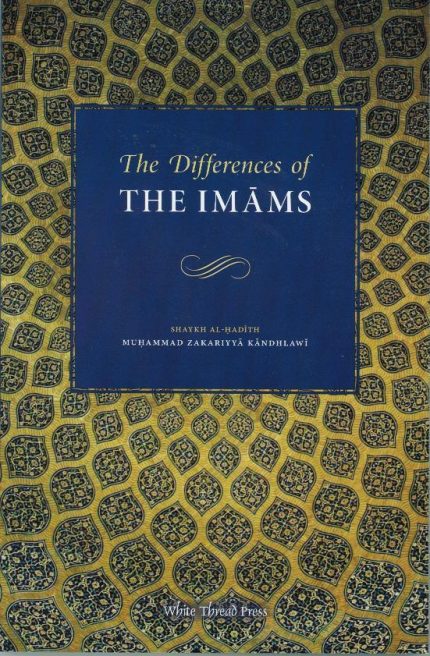
Differences Of The Imaams
R145.00For some time now people have been occupied with the question that, since the Imams (of various schools) have established everything from the sayings and practices of the Messenger of Allah (S), why are there differences of opinion among them? The numerous sessions of debates and the excessive number of publications on the issues of controversy have rendered the problem even more menacing. The issue has reached such dire proportions that those who object (to why the Imams have differed) have split into two groups. The first group is haplessly trapped in their evil thoughts of the Imams, so much so that even if they wish to disentangle themselves from this vicious web just out of good thought for the Imams, they are unable to free themselves from this trap because they are further ensnared by the apparent disparity between the sayings of the Imams and some of the clear source texts.
The second group, on the other hand, has gone even further and, let alone the Imams, they have started harboring insolent thoughts about the Messenger of Allah (S) himself; simply because of the apparently contradictory hadiths transmitted from him. However, the fault lies in referring to (English or) Urdu translations of the hadiths, because in order to get a clear picture of the meaning, one has to posses the intellectual capacity to comprehend the hadiths together with a proper understanding of the background and the prelude of the hadiths. In the absence of these prerequisites, the mere translation of the hadiths is bound to lead to objections and misgivings.
The repercussions of these differences have reached such proportions that people have split up into various sects grappling and contending with one another. The wudu’ of one group is considered invalid by the other while the salat of one group is considered void by the other, and so forth. In zakat, sawm, hajj and virtually every other act of worship [‘ibada] as well, there is inevitably some difference or other which has led to people debating with one another.
Therefore, it has become necessary to expose the basis of the differences (of opinion) found among the Imams. The reasons for these differences, dating back to the first epoch of Islam, will be expounded upon to demonstrate that the apparently contradictory texts of the hadiths leave no scope for doubting the Messenger of Allah (S), nor do they give anyone the right to cast aspersions on the Companions [sahaba], the Followers [tabi’in] or the Imams (may Allah have mercy on them). The fact is that all the Imams [mujtahidin] were leaders of the correct path and they encouraged and guided the masses toward the correct path as well. Any slanderous remark cast against them is a sure sign of the deprivation of Allah’s mercy.
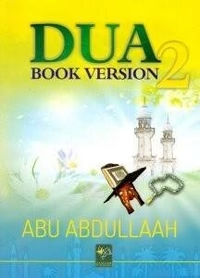
Dua’ Book Version 2
R50.00Dua’ Book Version 2 is a beautifully illustrated book designed to teach children essential Islamic supplications (duas) and prayers. The book presents these duas in both Arabic and English, making it accessible for young readers to learn and understand. Each dua is accompanied by vibrant illustrations that capture the essence of the supplications, helping children to connect with the meanings and significance of the prayers. This book serves as an excellent resource for parents and educators aiming to instill the habit of daily supplication in children from an early age.

Duas for Contentment of the Heart
R25.00This book is a compilation of various supplications and verses from the Qur’an and Hadith, aimed at bringing peace and contentment to the heart.
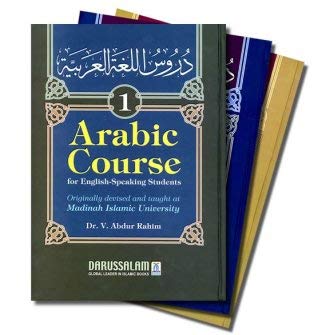
Easy Arabic Course (3)
R120.00The Easy Arabic Course is a structured series designed to teach Arabic to English-speaking students, focusing on Qur’anic and traditional Arabic. Developed by Prof. V. Abdur Rahim, a renowned scholar in Arabic language and literature, the course is based on the curriculum prescribed by the Islamic University of Madinah. It adopts a conversational approach to help learners understand grammatical usage in its perfect form, combining modern Arabic vocabulary with Islamic terminology as used in the Qur’an and Hadith.
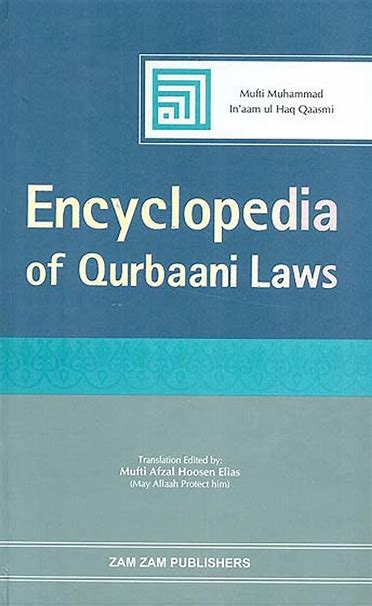
Encyclopedia Of Qurbaani Laws
R30.00Truly as the name suggests the book has literally hundreds of rules and laws. Well researched and put in the place. Laws pertaining to all aspects of qurbani expounded. Rules concerning the age, eye, hair, legs meat, foot, movement, skin, slaughtering, butcher, aids, workers and rope have been detailed. The history, significance and important of Qurbaani are stated. Qurbaani and partnership, Qurbaani of the poor of the wealthy, of defective animals at various stages are stipulate.
A book to be studied by all venturing to make Qurbaani and a useful text book for the scholars.
Sending Money And Making Qurbaani In Another Country.
When Qurbaani is compulsory upon a person, it will be valid for him if he sends the money to another country and tells somebody to perform the Qurbaani. It will be valid for him to do it in such a way. There is no dislike regarding this in the light of Shariah.
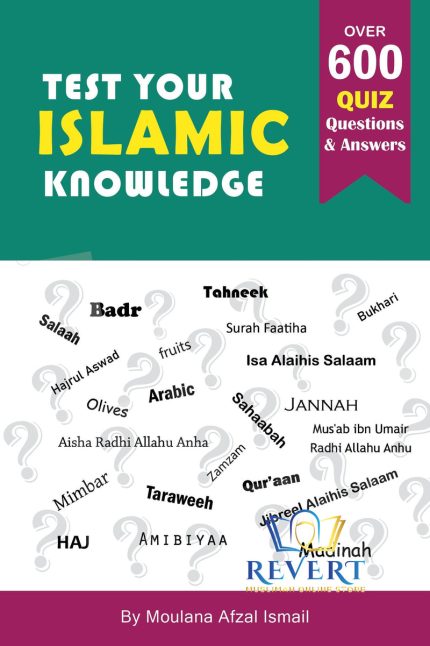
est Your Islamic Knowledge
R50.00“Test Your Islamic Knowledge” is an engaging quiz book designed to enhance children’s understanding of Islam. It contains over 600 quiz questions and answers, covering various aspects of Islamic teachings, including the Quran, the life of Prophet Muhammad (peace be upon him), Islamic history, and more. The book is structured to cater to different age groups and knowledge levels, making it an excellent resource for both individual learning and group activities.
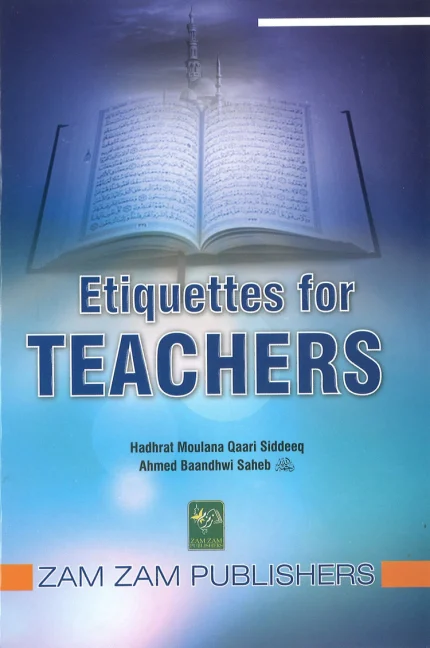
Etiquettes for Teachers
R25.00Etiquettes for Teachers is a concise guide outlining ten essential etiquettes for educators, rooted in the Qur’an and Sunnah. Authored by the esteemed Hadhrat Maulana Qari Siddeeq Ahmad Baandwi (RA), the book emphasizes the spiritual and moral responsibilities of teachers. It serves as a valuable resource for educators aiming to align their teaching practices with Islamic principles.
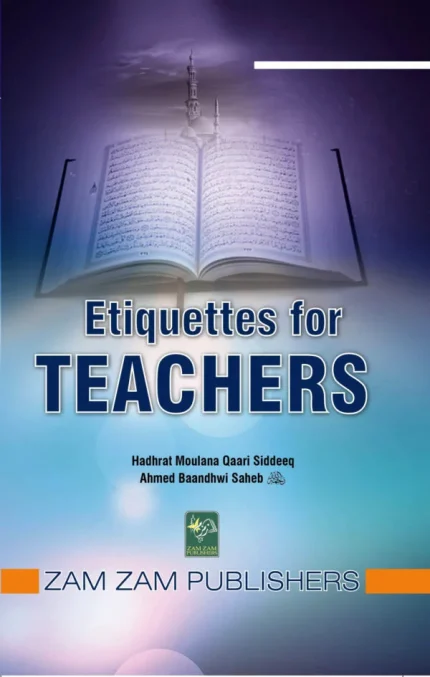
Etiquettes for Teachers
R25.00Etiquettes for Teachers is a concise guide that outlines the essential manners and responsibilities of educators in Islam. Authored by Hadhrat Maulana Sayed Siddiq Ahmad Baandwi Saheb (R.A), the book emphasizes the noble status of teachers and the profound impact they have on shaping the character and knowledge of their students. Drawing from Islamic teachings, the book provides practical advice on how teachers can embody the qualities of patience, humility, sincerity, and dedication. It serves as a reminder that teaching is not merely a profession but a form of worship and a means to attain closeness to Allah.
Fawaid Makkiya
R45.00“An English translation by Muḥammad Ṣālim Gaibie. Fawāʾid Makkiyyah gathers key tajwīd principles with author Qāriʾ ʿAbd al‑Raḥmān al‑Makkī’s biographical notes, translator’s sanad, and systematic transliteration to help students master correct Qur’ānic recitation.”
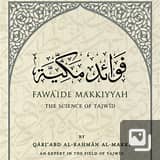
Fawaid Makkiya
R60.00“An English translation by Muḥammad Ṣālim Gaibie. Fawāʾid Makkiyyah gathers key tajwīd principles with author Qāriʾ ʿAbd al‑Raḥmān al‑Makkī’s biographical notes, translator’s sanad, and systematic transliteration to help students master correct Qur’ānic recitation.”