Aqeedah
English Kitaab

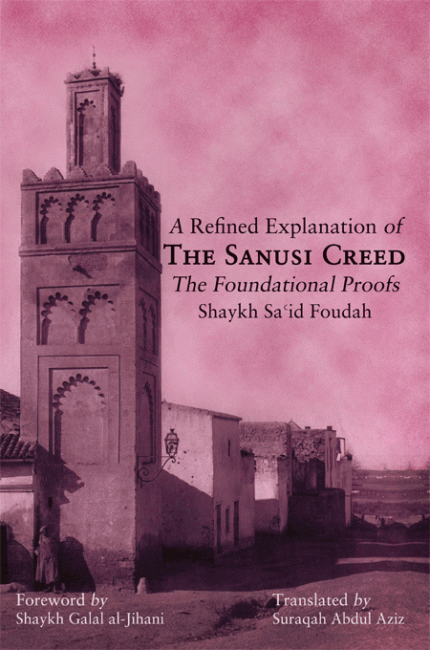
A Refined Explanation Of The Sansui Crees

R375.00

The Foundational Proofs of Imam al-Sanusi is one of the foundational works in Islamic theology and is considered historically as an elemental text in traditional Islamic education. Studied for centuries and memorized by children throughout the Islamic world, The Foundational Proofs offers readers a methodical outline of Islamic doctrine that satisfies the mind and the heart alike. In this age of mass confusion and intellectual malaise, where fundamental Islamic beliefs are misunderstood and credulity is championed as faith, The Foundational Proofs explains the tenets of faith and supports them both rationally and textually.

Further enhancing the value of this work is the engaging and relevant additions of Shaykh Sa’id Foudah, one of the worlds leading Islamic theologians today, who presents Imam al-Sanusi’s work with the interlinear commentary of Imam Ahmad b. Isa al-Ansari and engaging and detailed footnotes collated from a variety of famous commentaries, such as those by Imam al-Bajuri, Imam al-Battawi, Imam al-Sawi, Imam al-Marghani, and others, as well as his own insightful comments.

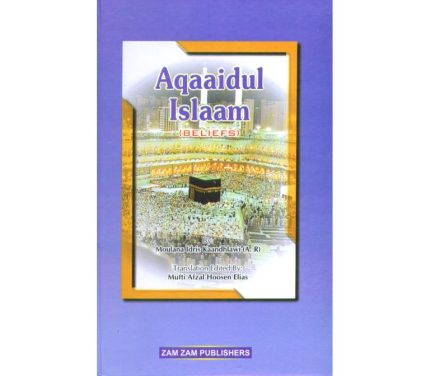
Aqaaidul Islam

R40.00

In this age of trials and tribulations, every so often, one hears and reads about a new unheard of fabricated belief floating around or denial of a standard belief of the Ahl Sunnah wal Jama’ah.

Thus, in this book, the original beliefs of the Ahl Sunnah wal Jama’ah have been listed and explained. It is essential for every Muslim to have valid, reliable, and authentic beliefs in conformity to the Ahl Sunnah wal Jama’ah.

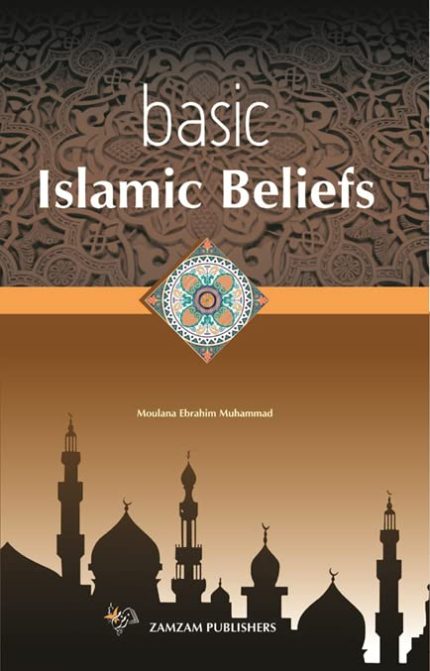
Basic Islamic Beliefs

R45.00
All praise is due to Allah, that after this compilation no Muslim will require another book for the correction of his beliefs because the acceptance of all actions is based on the accuracy of beliefs. Therefore, like Bahisti Zewar and Taleemul Islam, The seekers of truth should regard this compilation of Imam Ahlus Sunnah (Allamah Abdue Shakoor) which is a key to salvation as extremely invaluable, recite each line several times and embed it in one’s heart and mind. This is an excellent way of reforming one’s actions. During the reign of Ali (R.A), two civil wars took place One was the battle of Jamal where Ali was on one side and Ayesha (R.A) was on the opposing side, Talha (R.A) and Zubair (R.A) who were from the Ashara Mubasharah were with her.

32 pages, Paperback

Published January 1, 2020

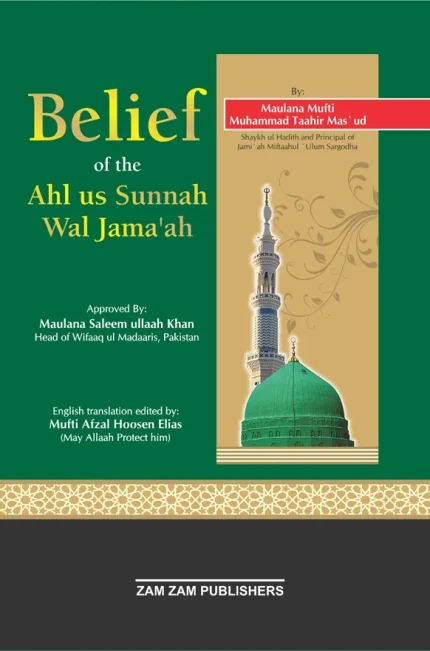
Beleif Of The Ahlus Sunnah Wal Jamah

R133.00

The fortune of man in this world lies in following the commands of Allah. Some of the commands of Allah are related to beliefs and some are related to action. The Importance of beliefs is more important than action. This is because eternal salvation is based on beliefs. Without beliefs, actions have no soul. If there are shortcomings in action, then it is hoped that it will be overlooked through the grace of Allah. However, one will not be forgiven if he fails in the scrutiny of his beliefs. In every era, the ahl us sunnah wal Jama’ah have correctly interpreted, adopted and followed the Islamic belief.

It was my desire that the belief of the Ahl us Sunnah wal Jamah should be compiled in such a way that it will be beneficial to people of every thought.


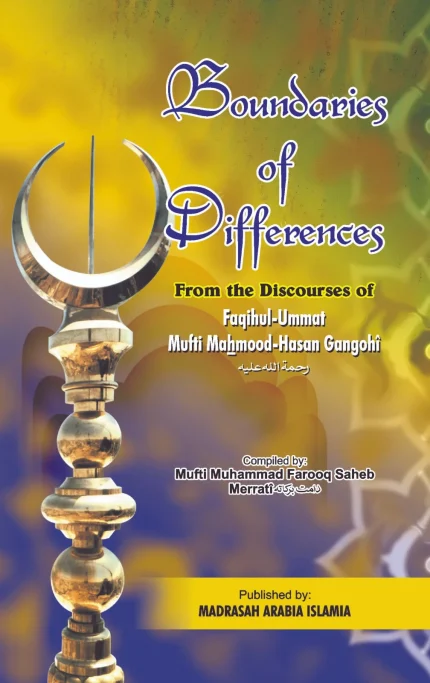
Boundaries Of Differences

R45.00

Allah had blessed this ummah with this illustrious Scholar of Islam, who was born on the 9th of Jumadal Ukhra 1325 AH, In Gangoh, district Saharanpur, India.

He led a very simple, ascetic and diciplined life, far from the luxuries of the rich and famous. He was the epitome of the Sunnah in our era.

After Completion of his studies under the tutorship of great luminaries such as hadrat Maulana Husain Ahmed Madani Rehmatullahi alaih,

he was appointed as assistant Mufti and later promoted to deputy Mufti of Madrasah Mazahirul Ulum in Saharanpur until 1370 A.H. In 1384 AH,

Hadrat Mufti Mahmud Hasan Gangohi rahmatullahi alaih left the transitory abode on the 19th of Rabiul Akhir 1417 AH (2 Sep 1996). 

When you read this book so you will become more concise to follow Deen e Islam.

Dajjal 2

R95.00

Sale!

Dajjal

 Original price was: ₨1200.Current price is: ₨1000.

Weight  –  0.40

Dimensions –  12 × 12 × 16 cm

Color    –  Black, Green, Indigo

Size –  Large, Small

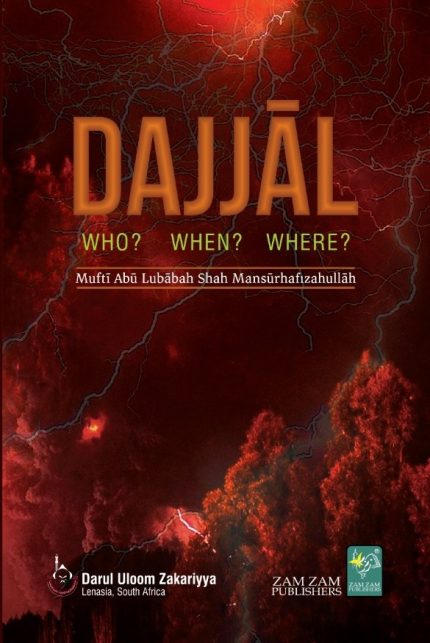
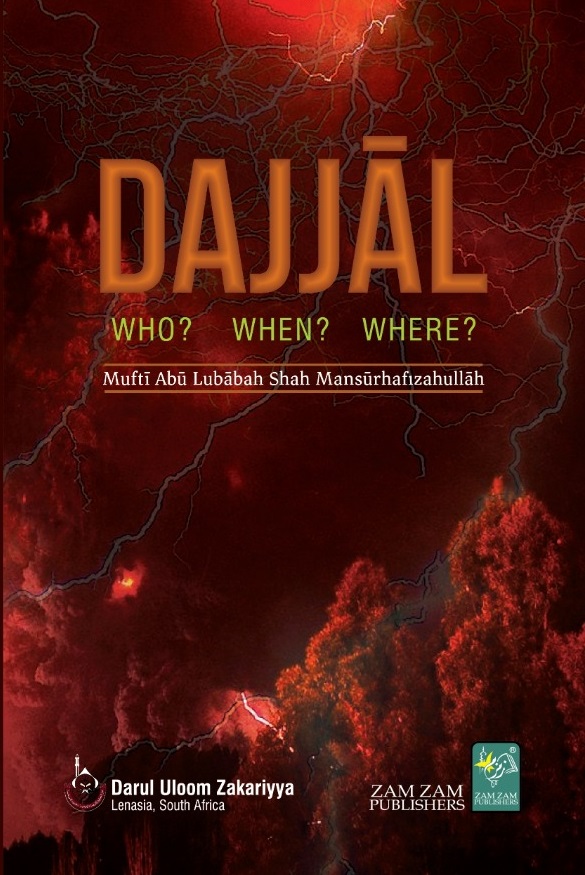
Dajjal (Who When Where)

This unique scholarly work of Muftī Abū Lubābah Shah Mansūr hafizahullāh probably shines out among the best of works on the interesting and intriguing topic of Dajjal Who When Where.

This work clearly indicates to the conditions and circumstances of the era of Dajjal Who When Where and it is a comprehensive overview of the conditions that will affect humanity.

The book in your hands has been written within the parameters of the explanations given by the senior scholars and every line of it calls for reform and action.

It is a message of turning to Allāh. It covers spiritual and practical steps that one must take in order to face the greatest trial in the history of humanity.

The author calls on you not only to study this work for information and curiosity, but to strive to change your life and build the enthusiasm and vigour to live and sacrifice yourself for the cause of religion.

Muftī Abū Lubābah Shah Mansūr hafizahullāh is a brilliant contemporary scholars and prolific author from Pakistan.

He serves as a teacher of Hadith at Jami’a Ar-Rashid in karachi, Pakistan.

He has more than thirty works to his credit and has written more than a thousand articles for different journals and magazines in pakistan.

Depression & Anxiety

SKU: 111111
R255.00

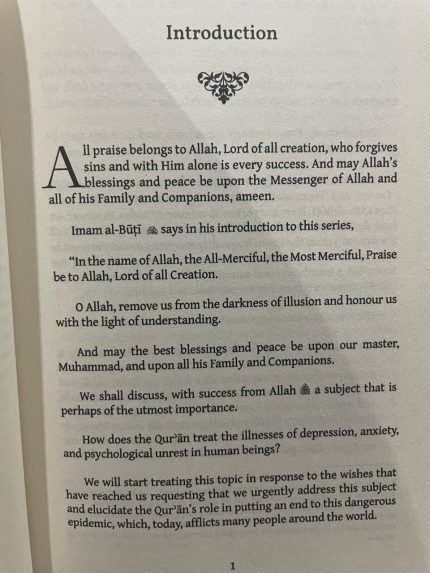
In a world plagued by depression and anxiety, “Depression and Anxiety: The Causes and Treatment According to the Qurän” explores these ailments from a unique perspective. Based on the teachings of Imam Muhammad Sa’eed Ramadän al-Büti, this groundbreaking book unveils hidden causes often overlooked within a secular paradigm.
Delving into different types of depression and anxiety linked to specific causes, it emphasizes the role of a strengthened relationship with Allah in finding healing and empowerment. This book offers spiritual enrichment, guiding readers to lessen their attachment to this world, purify their hearts and souls, and understand the purpose of their existence.
By drawing nearer to Allah and embracing the teachings of the Quran, readers gain the competence and strength to face life’s challenges without succumbing to anxiety or depression. With insightful appendices and additional resources, “Depression and Anxiety: The Causes and Treatment According to the Quran” provides the tools for a deeper understanding, guiding individuals towards the emotional well-being and inner peace that comes from being close to one’s Lord.
And with Allah alone is every success.
( From the publisher)

Differences In The Ummah

R80.00

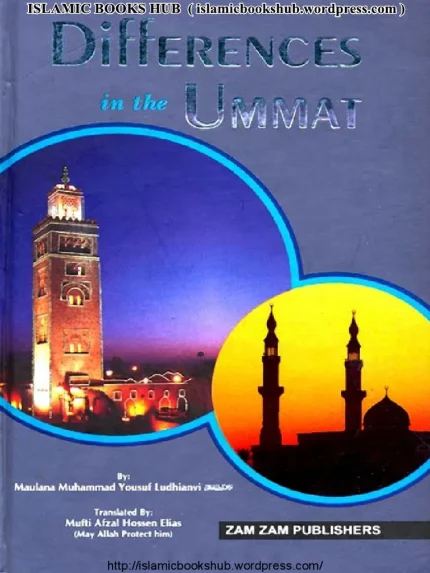
Differences in the Ummah and the Straight Path by Maulana Muhammad Yusuf Ludhianvi (رحمه الله) is a comprehensive examination of various theological and jurisprudential differences within the Muslim community. The book critically analyzes divisions such as Shia-Sunni, Hanafi-Wahhabi, and Deobandi-Barelvi-Maudoodi, addressing common questions like “Why do these differences exist?” and “Who should we follow?” It distinguishes between acceptable scholarly disagreements (Ijtihaadi Ikhtilaaf) and more serious ideological divergences (Nazaryaati Ikhtilaaf), emphasizing adherence to the path of the Prophet Muhammad (peace be upon him) and his companions as the criterion for truth.

Differences Of The Imaams

R145.00

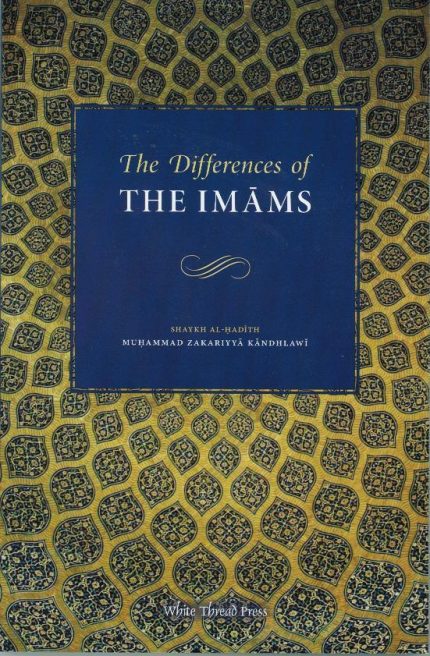
For some time now people have been occupied with the question that, since the Imams (of various schools) have established everything from the sayings and practices of the Messenger of Allah (S), why are there differences of opinion among them? The numerous sessions of debates and the excessive number of publications on the issues of controversy have rendered the problem even more menacing. The issue has reached such dire proportions that those who object (to why the Imams have differed) have split into two groups. The first group is haplessly trapped in their evil thoughts of the Imams, so much so that even if they wish to disentangle themselves from this vicious web just out of good thought for the Imams, they are unable to free themselves from this trap because they are further ensnared by the apparent disparity between the sayings of the Imams and some of the clear source texts.

The second group, on the other hand, has gone even further and, let alone the Imams, they have started harboring insolent thoughts about the Messenger of Allah (S) himself; simply because of the apparently contradictory hadiths transmitted from him. However, the fault lies in referring to (English or) Urdu translations of the hadiths, because in order to get a clear picture of the meaning, one has to posses the intellectual capacity to comprehend the hadiths together with a proper understanding of the background and the prelude of the hadiths. In the absence of these prerequisites, the mere translation of the hadiths is bound to lead to objections and misgivings.

The repercussions of these differences have reached such proportions that people have split up into various sects grappling and contending with one another. The wudu’ of one group is considered invalid by the other while the salat of one group is considered void by the other, and so forth. In zakatsawmhajj and virtually every other act of worship [‘ibada] as well, there is inevitably some difference or other which has led to people debating with one another.

Therefore, it has become necessary to expose the basis of the differences (of opinion) found among the Imams. The reasons for these differences, dating back to the first epoch of Islam, will be expounded upon to demonstrate that the apparently contradictory texts of the hadiths leave no scope for doubting the Messenger of Allah (S), nor do they give anyone the right to cast aspersions on the Companions [sahaba], the Followers [tabi’in] or the Imams (may Allah have mercy on them). The fact is that all the Imams [mujtahidin] were leaders of the correct path and they encouraged and guided the masses toward the correct path as well. Any slanderous remark cast against them is a sure sign of the deprivation of Allah’s mercy.

Imaam Abu Hanifa’s Fiqhul-Akbar Explained

R395.00
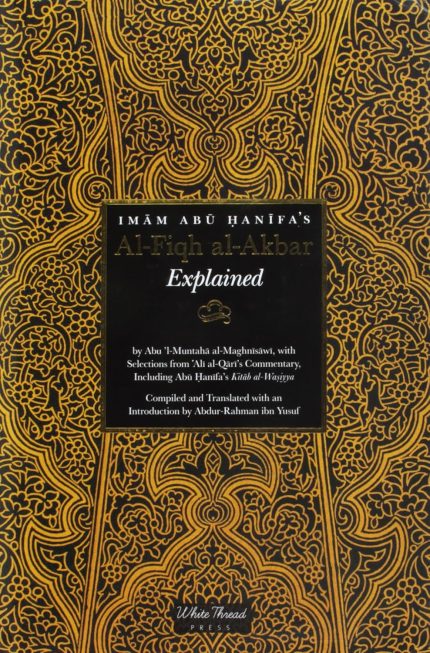
by Abu ‘l-Muntaha al-Maghnisawi with Selections from ‘Ali al-Qari’s Commentary, including Abu Hanifa’s Kitab al-Wasiyya Hardback edition with two color text inside Al-Fiqh al-Akbar is one of the earliest texts written on central Islamic theology, and one of the surviving works of Abu Hanifa, the Great Imam of jurisprudence and theology. Studied for centuries in the Muslim world, Al-Fiqh al-Akbar offers a layered understanding of divine oneness (tawhid), the underpinning of Islamic belief. It helps to refine one’s understanding of the Creator, messengers, and divine communication, and enables one, moreover, to gain insight into the realities of this life and the events of the life hereafter. Al-Fiqh al-Akbar adds nuance to one’s understanding of ‘aqida and deepens one’s appreciation of his or her beliefs, and addresses head-on questions that, if unanswered, could leave invidious doubt and cause communal division: “Where is Allah?” “Does Allah evolve?” “What constitutes true Islamic beli

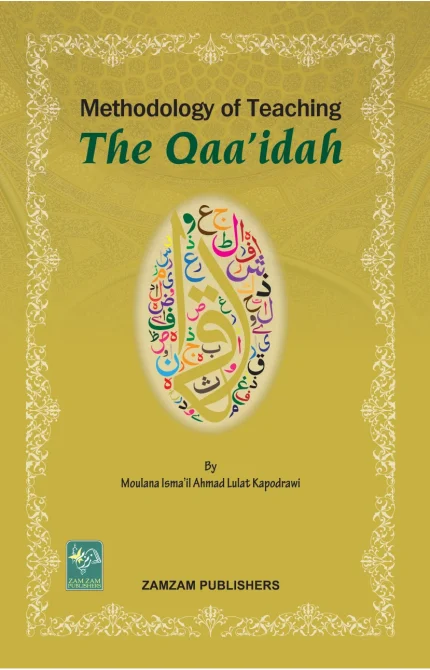
Methodology Of Teaching The Qaaidah

R45.00

The book before you is a translation of the book. It outlines an excellent and practical method of teaching the Qaaidah to students of grade one, and also advances beyond that towards teaching Amma Para which is generally done in grade two in our Makaatib.

The method outlined, uses a more interactive method of teaching than that which is common in our Makaatib. It engages the students more with regards to understanding the lesson, rather than only the teacher explanning the entire lesson. This interactive method speeds up the lesson. This interactive method speeds up the learning process and gives the student confident and a better understanding.

The author has tried his best to mention each point separately and as simply as possible. In places where centain matters are vague and need explanation, or contradict a point within the book, the translator has added footnotes to indicate this.

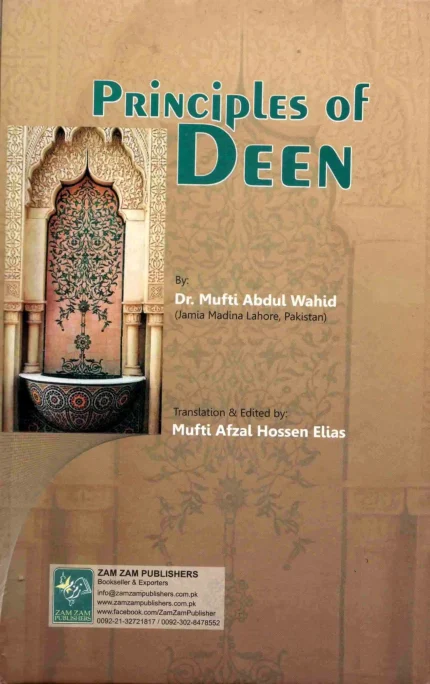
Principles Of Deen

R65.00

The book “Principles of Deen” has 12 chapters, explaining:

1.) Wahi

2.) Principles of Tafseer

3.) Principles of Hadith

4.) The consensus of the Ummat (Ijma)

5.) Qiyas

6.) What is Fiqh

7.) Principles of Fiqh

8.) Essentials of Fiqh

9.) Principles of ijtihad

10.) Principles of Taqleed

11.) Principles of Sunnat and Bid’at and

12.) Principles of Imaan and Kufr.

Information in this book, because of its close link to classically written text will be new to many readers. Thus I suggest one reads, studies and seeks further explanation from Ulema. In fact, it is an ideal textbook for advanced adult classes in any part of the world.

The contents, if understood, will definitely create a better rapport, link, and bridge between the lay Muslims and the Ulema e Haqq. Dr. Mufti Abdul Wahid, Mufti of Jamia Madina Lahore, Pakistan, has written many other works which are compiled in syllabus form. These are taught in numerous Masaajids in Pakistan.