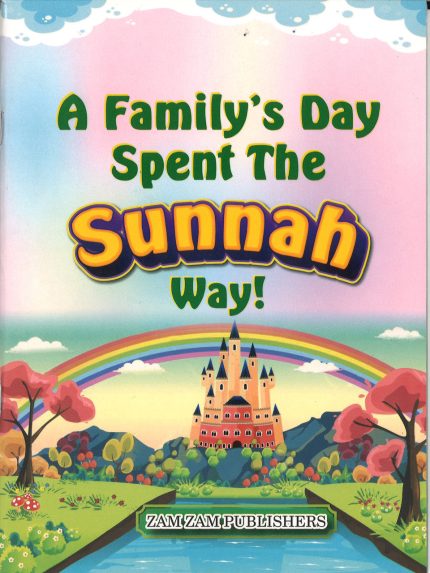
A Family’s Day Spent the Sunnah Way

R80.00
"A Family's Day Spent the Sunnah Way" is a heartwarming children's book that introduces young readers to the importance of following the Sunnah of Prophet Muhammad (peace be upon him). Through a simple and engaging story, the book depicts a day in the life of a family practicing Islamic traditions, such as performing prayers, engaging in acts of kindness, and maintaining good manners. The narrative encourages children to incorporate these practices into their daily lives, fostering a deeper connection with their faith.

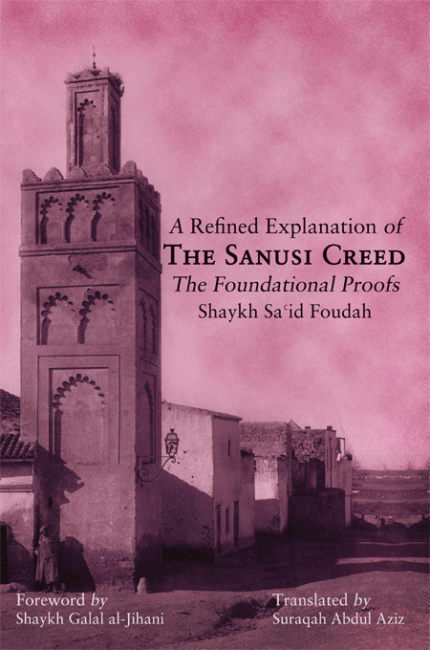
A Refined Explanation Of The Sansui Crees

R375.00
The Foundational Proofs of Imam al-Sanusi is one of the foundational works in Islamic theology and is considered historically as an elemental text in traditional Islamic education. Studied for centuries and memorized by children throughout the Islamic world, The Foundational Proofs offers readers a methodical outline of Islamic doctrine that satisfies the mind and the heart alike. In this age of mass confusion and intellectual malaise, where fundamental Islamic beliefs are misunderstood and credulity is championed as faith, The Foundational Proofs explains the tenets of faith and supports them both rationally and textually. Further enhancing the value of this work is the engaging and relevant additions of Shaykh Sa'id Foudah, one of the worlds leading Islamic theologians today, who presents Imam al-Sanusi's work with the interlinear commentary of Imam Ahmad b. Isa al-Ansari and engaging and detailed footnotes collated from a variety of famous commentaries, such as those by Imam al-Bajuri, Imam al-Battawi, Imam al-Sawi, Imam al-Marghani, and others, as well as his own insightful comments.

A Sound In A Cloud

R45.00
A Sound in a Cloud by Maulana Ebrahim Muhammad is a children's storybook published by Zam Zam Publishers. This 24-page illustrated book aims to teach young readers about the virtues of charity in Islam through engaging storytelling and vivid illustrations. The narrative follows a young character who learns the importance of giving, kindness, and helping others, connecting Islamic teachings about charity, such as sadaqah and zakat, with relatable life lessons that emphasize empathy, gratitude, and community.

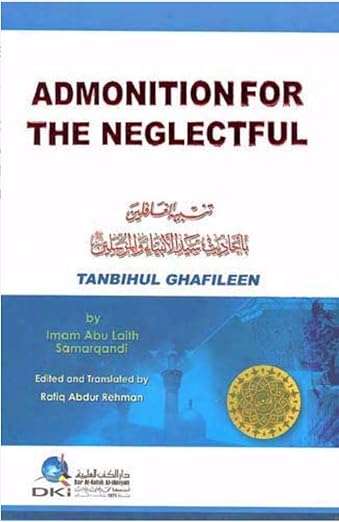
Admonition for the Neglectful

R120.00
Admonition for the Neglectful (Tanbihul Ghafileen) is a renowned Islamic text authored by Faqih Abu Lais Samarqandi (r.a), a prominent scholar of the 4th century Hijri. The book serves as a spiritual guide, offering counsel to those who have become heedless of their religious duties. It emphasizes the importance of self-awareness, repentance, and the pursuit of righteousness.

Advice to My Son

R145.00
Advice to My Son is a concise and heartfelt collection of sixteen reminders penned by Ibn al-Jawzi to his son, who had deviated from the righteous path. The counsel encompasses themes such as self-discipline, the pursuit of knowledge, sincere repentance, and the importance of adhering to divine guidance.

Ahmed Deedat: The Man and His Mission

R315.00

Ahmed Deedat: The Man and His Mission chronicles the remarkable life of Sheikh Ahmed Deedat, a self-taught Muslim scholar and missionary from South Africa. Born in 1918 in British India, Deedat moved to South Africa at the age of nine. Despite limited formal education, he became renowned for his expertise in comparative religion, particularly in debates with Christian evangelists.

The biography details his early years working in a grocery shop, his exposure to Christian missionary activities, and his subsequent dedication to Islamic propagation. It highlights his founding of the Islamic Propagation Centre International (IPCI) in 1957 and his efforts to promote Islam through lectures, debates, and publications

The book also delves into the challenges Deedat faced, including criticism from various quarters and the impact of his work on interfaith dialogue. It provides insights into his personal life, his commitment to Islamic teachings, and his legacy as a prominent figure in the Muslim world.

Aisha and the Story of the Slander

R25.00

This book provides a detailed analysis of the incident of slander (Ifk) that befell Hadhrat Aisha (RA), the beloved wife of the Prophet Muhammad (PBUH). Drawing from classical Islamic sources, the author delves into the events surrounding the slander, the challenges faced by Hadhrat Aisha (RA), and the eventual revelation of her innocence. The narrative aims to offer readers a comprehensive understanding of this significant event in Islamic history.

Al Fawzul Kabeer
R175.00
Shah Waliullah’s introductory treatise on Qur’ānic exegesis outlines the five core ‘sciences’ contained within the Qur’ān—providing students with a structured foundation in usūl al‑tafsīr.

Al Muwattah Of Imam Malik

R650.00
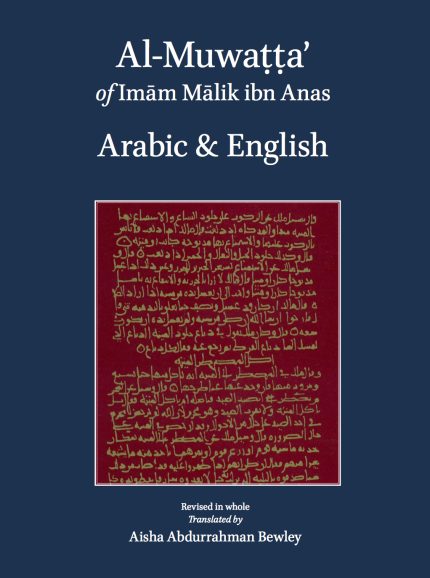
It is the first of the sahih works, long pre-dating al-Bukhari and Muslim. Al-Bukhari regarded the transmission of Imam Malik narrating from Nafi‘ from ‘Abdullah ibn ‘Umar from the Messenger of Allah, may Allah bless him and grant him peace, as being ‘the Golden Chain of Transmission’. Abu Dawud, whose Sunan is another of the Six Books of hadith, added “then Malik, from az-Zuhri, from Salim, from his father [i.e. Ibn ‘Umar], then Malik, from Abu z-Zinad, from al-A‘raj, from Abu Hurayrah”, without mentioning anything from anyone other than Malik. Ibn Hajar said, “… some imams say that they are unqualifiedly the soundest of isnads, such as az-Zuhri i.e. the hadith which az-Zuhri – who is better known as Ibn Shihab – narrated from Salim i.e. transmitting to him from Salim ibn ‘Abdullah ibn ‘Umar from his father. The school of Ahmad [ibn Hanbal] and Ibn Rahwayh is that this is unqualifiedly the soundest chain of transmission”. Adh-Dhahabi held that, “The soundest of chains of transmission are those from az-Zuhri from Sa‘id ibn al-Musayyab from Abu Hurayrah” which are abundant in the Muwatta. Then those which come from Abu’z-Zinād from al-A‘raj from Abū Hurayrah.” Ash-Shāfi‘ī said, “After the Book of Allah, there is no book on the face of the earth sounder than the book of Mālik.” ‘Alā’ ad-Dīn Maghlaṭāy al-Ḥanafī said, “The first person to compile the ṣaḥīḥ was Mālik.” Ibn Ḥajar said, “The book of Mālik is sound by all the criteria that are demanded as proofs in the mursalmunqaṭi‘ and other types of transmission.” As-Suyūṭī followed Ibn Ḥajar’s judgement and said, “It is absolutely correct to say that the Muwaṭṭa’ is sound (ṣaḥīḥ) without exception.” Al-Bukhārī and Muslim transmitted most of its ḥadīths and included them in their Ṣaḥīḥ collections. The authors of the rest of the six books, the Imām of the ḥadīth scholars, Aḥmad ibn Ḥanbal, and others did the same. In addition, the Muwaṭṭa’  contains a record of the practice (‘amal) of the people of Madīnah of the first generations, a transmission of the ethos that permeated the city, and Imām Mālik’s painstaking clarification of the Sunna, the ḥadīths, the practice and legal judgements.

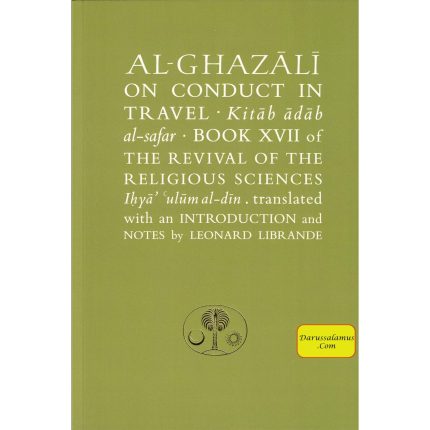
Al-Ghazali on Conduct in Travel

R395.00

Al-Ghazali on Conduct in Travel is the 17th book of Imam al-Ghazali's seminal work, Ihya' Ulum al-Din (The Revival of the Religious Sciences). In this treatise, al-Ghazali explores the etiquette and spiritual dimensions of travel, emphasizing both the outward and inward aspects of a journey.

Al-Ghazali categorizes travel into four types

  1. Pilgrimage (Hajj)A journey undertaken for religious purposes.

  2. Seeking KnowledgeTraveling to acquire beneficial knowledge.

  3. Flight from HarmEscaping from danger or oppression.

  4. Seeking LivelihoodJourneys undertaken to earn a lawful income.