

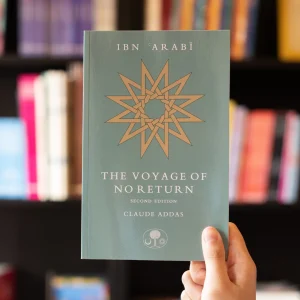
Ibn Arabi: The Voyage of No Return
"Ibn Arabi: The Voyage of No Return" by Claude Addas is a concise and insightful introduction to the life and thought of Ibn Arabi, one of the most influential Sufi mystics. The book traces the major events of Ibn Arabi's life, including his conversion to Sufism, his extensive travels across Andalusia, the Maghreb, and the Middle East, and his encounters with various saints and scholars of his time. Addas delves into Ibn Arabi's profound spiritual experiences and his contributions to Sufi philosophy, particularly his doctrines on prophethood, sainthood, the 'unicity of Being', and the 'imaginal world'. The second edition of the book includes a new preface and an updated bibliography, providing readers with a comprehensive understanding of Ibn Arabi's legacy and his enduring influence on Islamic mysticism.
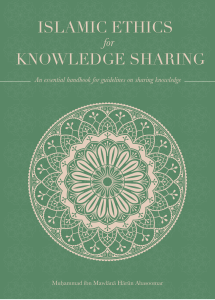
Islamic Ethics for Knowledge Sharing
In today's digital age, the rapid dissemination of information through platforms like WhatsApp, email, and social media has made knowledge sharing more accessible than ever. However, this ease of sharing comes with the responsibility of ensuring that the information shared is accurate and aligns with Islamic principles.
Islamic Ethics for Knowledge Sharing addresses this concern by outlining ten essential principles that guide Muslims in sharing knowledge responsibly. Authored by Mufti Muhammad ibn Harun Abasoomar, the book emphasizes the importance of authenticity, context, and the ethical implications of sharing information.
The book serves as a valuable resource for educators, students, and anyone engaged in the dissemination of knowledge, ensuring that their practices align with the ethical standards set forth in Islam.

Sea Without Shore: A Manual of the Sufi Path
"Ibn Khaldun on Sufism: Remedy for the Questioner in Search of Answers" is the first-ever English translation of Ibn Khaldun's treatise Shifa’ al-Sa’il li-Tahdhib al-Masa’il. In this work, Ibn Khaldun addresses a prevalent debate in fourteenth-century Andalusia regarding the necessity of a spiritual guide (shaykh) for the Sufi path. He examines whether reliance on written texts suffices for spiritual guidance or if direct mentorship is essential.
The treatise delves into the nature of Sufism, its practices, and its role within Islamic spirituality. Ibn Khaldun, renowned for his contributions to sociology and historiography, applies his analytical acumen to assess the legitimacy and requirements of the Sufi tradition. His insights offer a nuanced understanding of Sufism's place in Islamic thought and practice
This translation by Yumna Ozer provides readers with access to Ibn Khaldun's perspectives on Sufism, shedding light on his views and the intellectual milieu of his time.
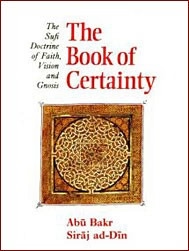
The Book of Certainty: The Sufi Doctrine of Faith, Vision and Gnosis
"The Book of Certainty" is a profound yet accessible introduction to Sufi metaphysics, authored by Dr. Martin Lings under the pen name Abu Bakr Siraj ad-Din. Drawing from Islamic mysticism, the book elucidates the three degrees of certainty
-
'Ilmu 'l-yaqin (Knowledge of Certainty)
-
'Aynu 'l-yaqin (Eye of Certainty)
-
Haqqu 'l-yaqin (Truth of Certainty)
Through vivid metaphors and traditional imagery, Lings explores themes such as the nature of the soul, the symbolism of light and darkness, and the journey of spiritual realization. The work is praised for its clarity and depth, making complex Sufi concepts accessible to readers.

Yearning for the Hereafter
"Yearning for the Hereafter" is a profound work by Maulana Ashraf Ali Thanwi (rahimahullah) that delves into the Islamic perspective on the afterlife. The book addresses topics such as the Day of Judgment, the experiences of the soul after death, and the eternal abode of Paradise or Hell. Through this work, the author aims to instill a deep sense of longing and preparation for the Hereafter, encouraging readers to lead a life that aligns with Islamic teachings and to remain mindful of their actions in this world.